Trump Administration Cuts Promised Military Assets to European Allies by Half
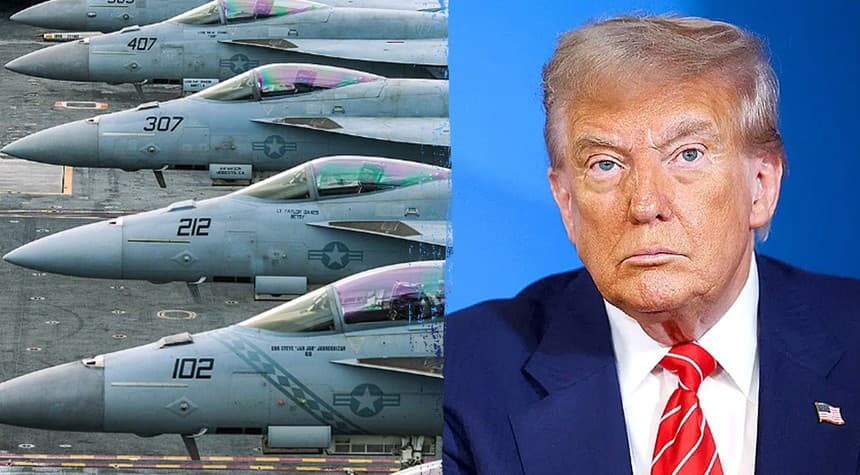
The Pentagon has delivered a message to our European allies that amounts to the most significant restructuring of the Atlantic alliance since the Cold War ended, and it is happening with the kind of speed that leaves diplomats scrambling and defense ministers losing sleep.
According to officials familiar with the matter, the Trump administration plans to reduce certain U.S. military capabilities available to NATO during a crisis by roughly one-third to one-half. We are talking about strategic bomber planes, fighter jets, and naval assets that have formed the backbone of European security for generations.
Pentagon official Alexander Velez-Green informed allied officials of these coming changes at the NATO Defense Policy Directors' meeting in Brussels this past Friday. While the Pentagon declined to confirm specific details, chief spokesman Sean Parnell acknowledged the shift in no uncertain terms, framing it as part of a broader effort to pressure allies to assume greater responsibility for their own defense.
"These changes represent an opportunity for allies to demonstrate that they have heard President Trump's call for them to step up and take primary responsibility for Europe's conventional defense," Parnell stated. He emphasized that spending more on defense is one thing, but allies must focus increased defense spending on the combat-credible capabilities most required for Europe's defense.
This announcement comes at a particularly telling moment. Lviv Mayor Andriy Sadovyi has been making the case that Ukraine's battlefield experience, drone warfare innovation, and wartime military adaptation are reshaping the future of NATO and European defense. The irony is hard to miss. While Ukrainians fight and die on Europe's eastern frontier, the question now facing Brussels is whether the rest of Europe is prepared to pick up the slack as America pivots toward the Indo-Pacific.
The move arrives ahead of the NATO leaders' summit in Ankara, Turkey, scheduled for July, where President Donald Trump is expected to intensify pressure on allies to shoulder more of Europe's defense burden. This is not subtle diplomacy. This is a fundamental recalibration of American strategic priorities.
European officials have largely avoided publicly criticizing the changes, but several have expressed concern about the pace and clarity of the administration's evolving posture toward Europe. NATO Secretary-General Mark Rutte has sought to reassure allies in recent days, insisting that any adjustments would occur "over time, in a structured way" and that "the U.S. will stay involved in Europe."
Those reassurances may provide some comfort, but the reality on the ground is stark. NATO foreign ministers meeting in Helsingborg, Sweden, have been grappling with uncertainty surrounding recent U.S. troop announcements in Europe.
The fundamental question facing the alliance is whether Europe possesses the political will and industrial capacity to fill the gap left by reduced American commitments. For decades, European nations have enjoyed the luxury of underfunding their militaries while American taxpayers footed the bill for their security. That era appears to be ending, and the adjustment will not be painless.
The Trump administration's message is clear: America will remain engaged in Europe, but the days of carrying the primary burden for European defense are over. Whether our allies rise to meet this challenge will determine not just the future of NATO, but the security architecture of the entire continent.
Related: Wisconsin Congressman Launches Investigation Into Massive Maryland Ballot Printing Error