Republican Senator Warns Trump Advisors Are Damaging GOP Senate Prospects
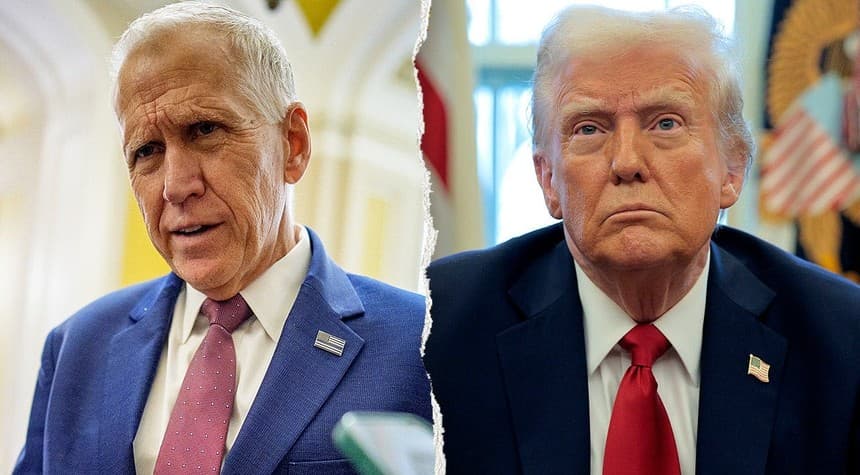
The relationship between President Donald Trump and North Carolina Senator Thom Tillis has reached a breaking point that should concern anyone who cares about the future of the Republican Party in Congress.
This is not just another Washington spat between political egos. What we are witnessing is a serious fracture within Republican ranks over policy decisions that could determine whether the GOP maintains control of the Senate come November.
Senator Tillis, who recently announced he will not seek reelection, has taken the unusual step of publicly criticizing multiple Trump administration advisors by name. He has pointed to specific policy failures that he believes are damaging Republican electoral prospects. Among his targets: decisions regarding a nearly $1.8 billion "anti-weaponization" fund, proposals for 50-year mortgages, plans to acquire private companies with taxpayer dollars, and the controversial firing of top military generals.
The senator went further, stating bluntly that "the stupid stuff is killing our chances" for Republicans to perform well in the upcoming midterm elections.
President Trump fired back on his social media platform, calling Tillis a "nitpicker" and claiming the senator quit his reelection race only after Trump refused to endorse him. The president labeled Tillis a "quitter" who is now spending his remaining months in office "screwing the Republican Party" alongside other Republicans he dismisses as insufficiently loyal.
This public feud raises important questions that deserve straight answers. When a sitting Republican senator with nothing to lose politically warns that current policies are endangering the party's Senate majority, should we dismiss those concerns out of hand? Or should party leaders take a hard look at whether internal conflicts are becoming a liability?
Tillis has specifically blamed White House advisor Stephen Miller and called for his removal, suggesting the problem lies not with the president himself but with those surrounding him. He has also criticized U.S. Pardon Attorney Ed Martin, Housing Director Bill Pulte, Commerce Secretary Howard Lutnick, and War Secretary Pete Hegseth for various policy decisions.
The senator's most pointed criticism concerned the administration's approach to Ukraine, particularly what he described as a failure to "hold Putin accountable for his systematic kidnapping, rape, torture, and murder of Ukrainian civilians."
When Tillis declared that if opposing these policies makes him a RINO, he "gladly accepts that nickname," he was drawing a line in the sand about what he believes constitutes genuine conservatism versus party loyalty at any cost.
The White House has responded by reaffirming Trump's leadership of the Republican Party and his commitment to maintaining the congressional majority. That is the expected response from any administration facing internal criticism.
But here is the uncomfortable truth that needs saying: Republicans currently hold a narrow Senate majority. Losing even a handful of seats in 2026 could flip control to Democrats. If sitting Republican senators are sounding alarm bells about policies they believe are electoral poison, ignoring those warnings could prove costly.
The American people deserve better than watching their elected representatives engage in public feuds while critical issues remain unaddressed. They deserve a Republican Party focused on delivering results, not settling scores.
Whether you side with Trump or Tillis in this dispute, one thing remains clear: internal party divisions benefit only one group, and that group sits across the aisle.
Related: Independent Candidate Mike Duggan Drops Out of Michigan Governor’s Race