Justice Department Probes Top Minnesota Officials for Alleged Obstruction of ICE Operations
The wheels of federal justice are turning in Minnesota, and two of the state's most prominent Democratic officials find themselves squarely in the crosshairs.
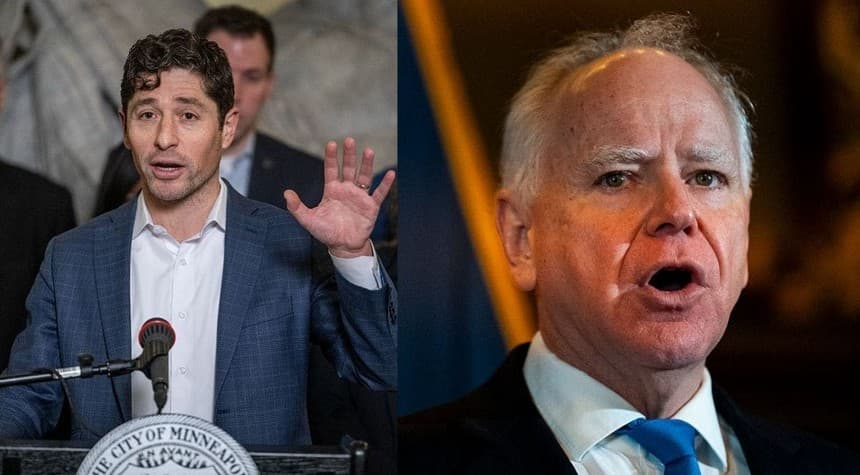
Governor Tim Walz and Minneapolis Mayor Jacob Frey are now subjects of a federal investigation, with the Justice Department examining whether their public opposition to immigration enforcement operations crosses the line from political disagreement into criminal obstruction. This is not some minor administrative inquiry. This is serious business.
The investigation centers on a specific federal statute that makes it a crime when two or more individuals conspire to use force, intimidation, or threats to prevent federal law enforcement officers from carrying out their lawful duties. The law is clear, and the allegations are grave.
What prompted this federal scrutiny? A series of statements from both Walz and Frey regarding the recent surge of Immigration and Customs Enforcement operations in Minnesota. The details of those statements have not been fully disclosed, but sources indicate they involved inflammatory rhetoric about ICE agents conducting their congressionally mandated duties.
Deputy Attorney General Todd Blanche pulled no punches when addressing the situation. He characterized what is happening in Minnesota as an "insurrection" and laid the blame directly at the feet of the governor and mayor. Blanche accused both officials of encouraging violence against law enforcement officers and promised that the federal government would use whatever means necessary to stop what he called their "terrorism."
Those are fighting words from the number two official at the Justice Department, and they signal just how seriously the Trump administration is taking this matter.
The larger context here matters. The Trump administration has launched what it describes as the most comprehensive immigration enforcement operation in American history. Agents have fanned out across the country, including Minnesota, to apprehend individuals in the country illegally and process them for removal.
Some state and local officials have welcomed this federal assistance. Others have actively resisted it. The question now before federal investigators is whether resistance has transformed into obstruction, whether political opposition has morphed into criminal interference.
The stakes are considerable. If federal prosecutors determine that Walz and Frey violated the conspiracy statute, both men could face serious criminal penalties. More broadly, this investigation sends a clear message to other state and local officials who might be considering similar tactics: the federal government will not tolerate interference with immigration enforcement.
Minnesota has become something of a flashpoint in the national debate over immigration policy. The state has a substantial immigrant population, and local politics often reflect deep divisions over how to balance humanitarian concerns with law enforcement imperatives.
But here is the fundamental issue: immigration law is federal law. States and cities do not get to nullify it simply because they disagree with it. Federal agents have both the authority and the responsibility to enforce the nation's immigration statutes, and state and local officials who actively impede that enforcement may find themselves answering to federal prosecutors.
This investigation is ongoing, and no charges have been filed. Both Walz and Frey deserve their day in court if it comes to that. But the fact that the Justice Department is investigating at all tells you everything you need to know about how the federal government views their conduct.
The rule of law means something, or it means nothing at all.
Related: Newsom Claims California Cooperates with ICE Despite Sanctuary State Policies