JD Vance Announces Bipartisan Effort to Combat Government Fraud Across All Fifty States
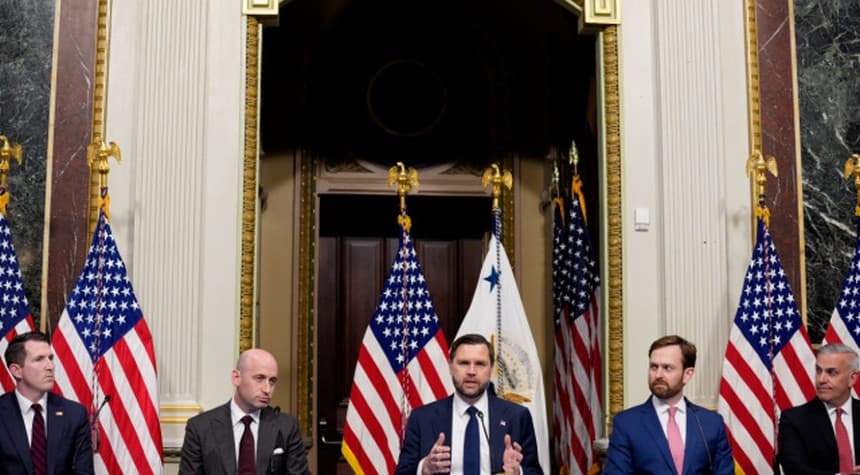
Courage, as the saying goes, is not the absence of fear but the willingness to act in spite of it. And what we witnessed this Tuesday in the Eisenhower Executive Office Building was a demonstration of political courage that transcends the usual partisan dividing lines.
Vice President JD Vance convened representatives from fifteen state attorneys general offices for the latest roundtable of the Task Force to Eliminate Fraud, and the message was clear as a bell: Washington is finally getting serious about protecting taxpayer dollars.
"One of the things we've realized in combating fraud is that the resources of the federal government, while vast, can be supplemented and aided by a lot of the people who know best what's happening in their states, which is the attorneys general represented here today," Vance explained to the assembled officials.
The vice president's approach represents something increasingly rare in our nation's capital: common sense married to action. By enlisting state attorneys general, who possess intimate knowledge of fraud patterns in their jurisdictions, the federal government is leveraging boots-on-the-ground expertise that bureaucrats in Washington simply cannot match.
What makes this initiative particularly noteworthy is its bipartisan nature. Representatives from Connecticut and Oregon, states not typically aligned with the current administration's politics, joined their counterparts from across the nation. Vance emphasized this point with conviction.
"This should not be a partisan effort," he stated firmly. "Everybody should care about fraud. Everybody should care about rooting out fraud. Everybody should care about saving the American taxpayers' money, and importantly, everybody should care about actually protecting the programs that only work and are only properly funded if the money funding those programs isn't being stolen by fraudsters."
The numbers emerging from this task force since its March inception are staggering, and they paint a troubling picture of just how deep the fraud problem runs in federal programs.
The task force has referred over twenty-two billion dollars in fraudulent small business loans back to the Treasury for collection. That figure alone represents more than most Americans can comprehend, yet it is merely one line item in a catalog of waste and abuse.
More than one billion dollars in fraudulent Medicaid reimbursements, particularly from California, have been deferred. The task force also implemented a six-month moratorium on new enrollments for hospice and home health care providers after discovering that many newer hospice operations were not providing actual end-of-life care but were instead operating as fraud schemes.
The COVID-19 pandemic, as many suspected, opened the floodgates to unprecedented levels of theft. The task force has been working to recover funds from the estimated one hundred thirty-five billion dollars stolen in the immediate aftermath of the pandemic, when oversight mechanisms were relaxed in the name of expedience.
Additionally, investigators have identified six point three billion dollars in suspected fraudulent government contracts, most of which were awarded during the previous administration. That practice, Vance assured the roundtable, has been halted.
Even student aid programs, designed to help young Americans pursue education and opportunity, have been compromised. The task force blocked sixty million dollars in student aid fraud that would have lined the pockets of criminals rather than helping students.
The partnership between federal and state law enforcement represents more than just good government. It represents a recognition that fraud is not a victimless crime. Every dollar stolen from federal programs is a dollar taken from hardworking Americans who play by the rules and expect their government to do the same.
As this initiative moves forward, the American people deserve regular updates on its progress. Transparency in rooting out fraud is just as important as the enforcement efforts themselves.
Related: Army Veteran Dies After Brutal Attack Outside His Trump-Decorated California Home